

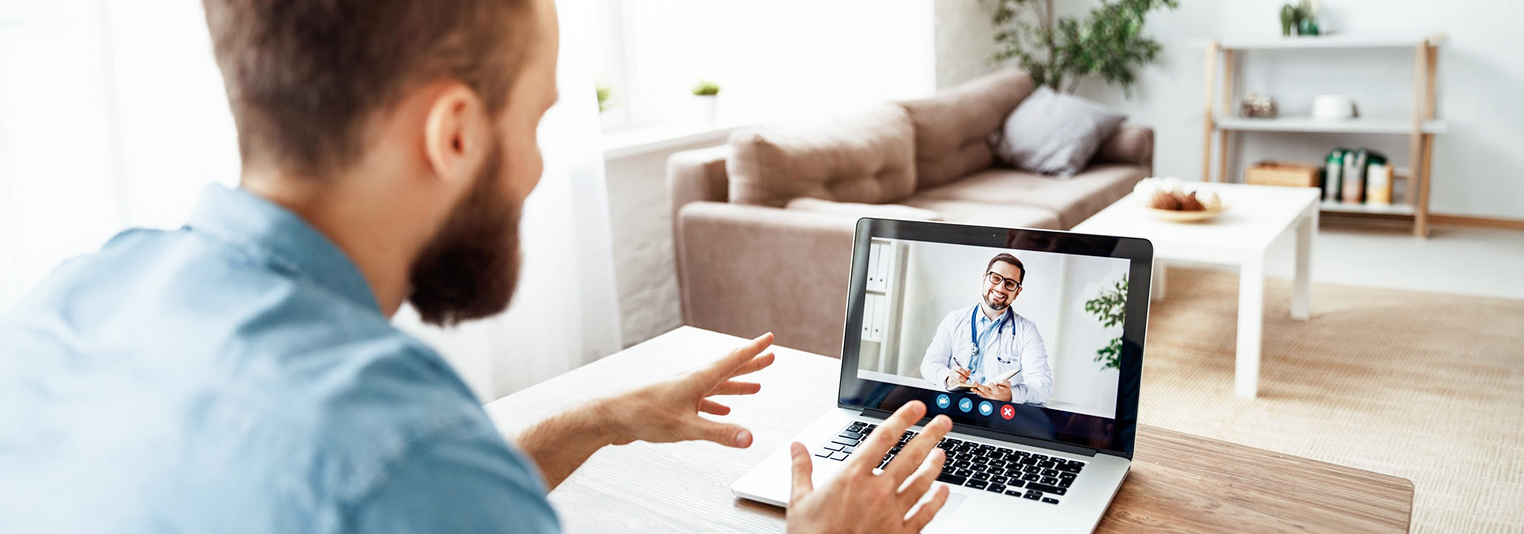
Anxiety treatment by secure video is not a workaround. It is the same clinical evaluation, the same evidence-based therapy, and the same medication management, delivered without a waiting room, a commute, or a morning off work.
Capital Psychiatry Group provides HIPAA-compliant telepsychiatry across New Jersey for anxiety and related conditions, with most appointments available within 24 hours.
Anxiety Care, Wherever You Are
Licensed New Jersey providers. Secure video. Insurance verified before your visit. Most appointments available within 24 hours.
Why New Jersey Adults Choose Telehealth for Anxiety
- Provider shortages are uneven across the state. Mental health providers concentrate in certain counties, leaving other communities underserved. Even in states like New Jersey, waitlists for therapists and psychiatrists can stretch for weeks or months.
- Anxiety itself makes the commute harder. Social anxiety, agoraphobia, and panic disorder all make traveling to a clinic unnecessarily difficult. Getting care from home removes one obstacle before the session even starts.
- Schedules don’t cooperate. Shift work, childcare, and long commutes make weekday afternoon appointments impractical for a large share of working New Jersey adults.
- Video sessions feel less exposing. Many patients report speaking more openly from a familiar private space than across a desk in an unfamiliar office.
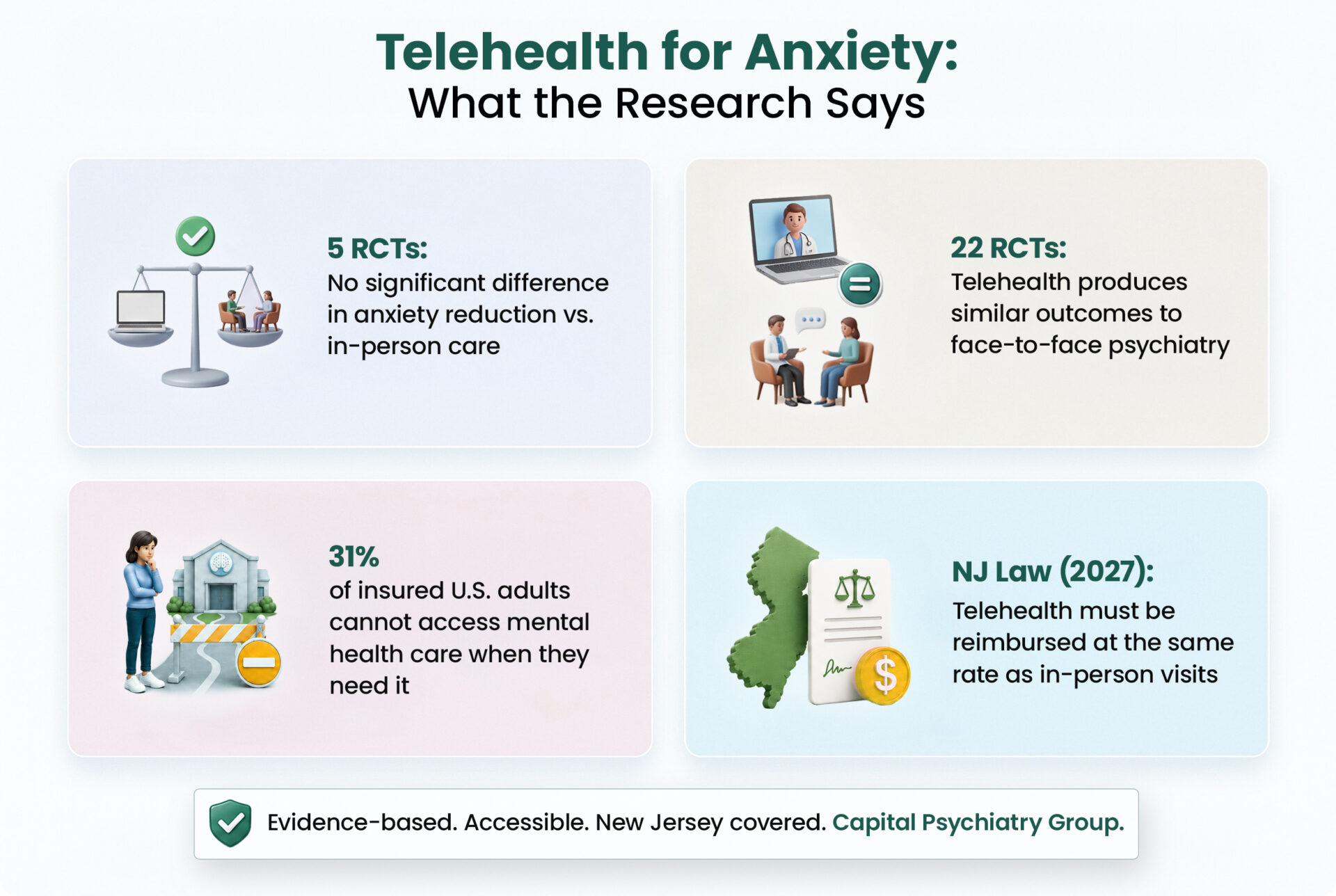
- Coverage is protected. New Jersey S3947, passed June 30, 2026, extends the requirement that health plans reimburse telehealth at the same rate as in-person visits, covering most private plans, Medicaid, and NJ FamilyCare. It does not cover Medicare.
Expert Insights
- A 2024 meta-analysis of five randomized controlled trials found no significant differences in anxiety reduction, depression symptoms, or functional outcomes between telehealth and in-person interventions.
- Based on evidence from 22 randomized controlled trials, telehealth platforms generally produce similar outcomes as face-to-face provision of psychotherapy and psychiatry services.
- 31% of U.S. adults report the inability to access mental health services despite being insured, and telepsychiatry is the most practical tool for closing that gap in New Jersey.
What a Telehealth Anxiety Appointment at CPG Looks Like
Before the Visit
- Booking: Call 609-323-5252 or book online. Staff verify your insurance and copay before the appointment, so cost is settled in advance.
- Secure link: You receive a HIPAA-compliant video link. No special software or downloads are required. It works on any smartphone, tablet, or computer.
- Intake forms: Completing these before the session means your time together is spent talking rather than typing.
At Your First Appointment
- Identity and location check: Your clinician confirms who you are and where you are physically located in New Jersey. This is a licensing requirement.
- Structured evaluation: Your clinician reviews your symptoms, how long they have been present, sleep, medical history, current medications, and what you want to be different.
- Screening tools: The GAD-7 measures anxiety severity. Where depression may be present alongside anxiety, the PHQ-9 is added. Diagnosis follows DSM-5 criteria.
- Ruling out other causes: Thyroid problems, certain medications, caffeine, and substance use can all mimic anxiety symptoms. The evaluation covers your medical history to rule them out.
- The plan: Your clinician explains what they found and what they recommend before you disconnect.
After the Appointment
- Prescriptions go electronically to your New Jersey pharmacy the same day when medication is part of the plan.
- Follow-up is scheduled before the call ends. You are not left to chase it.
- Between-session work: You may receive homework assignments, breathing and grounding techniques to practise, or access to mood tracking tools.
Is Telepsychiatry Actually Effective for Anxiety?
- CBT translates well: Cognitive behavioral therapy, acceptance and commitment therapy, exposure therapy, and mindfulness-based interventions are all adaptable to telehealth settings, with comparable outcomes to in-person delivery.
- Exposure work has an extra advantage: For social anxiety and agoraphobia, practising coping skills in your own environment is often more realistic than practising in a clinic and then generalizing.
- Consistency is what drives outcomes, and removing the commute is the single most effective way to protect weekly attendance.
- Therapeutic alliance holds: The majority of studies found no significant differences in satisfaction with care, quality of the therapeutic alliance, or study discontinuation between telehealth and in-person groups.
- One nuance worth knowing: GAD is characterized by intolerance of uncertainty, and for some patients, the unfamiliarity of video sessions may provoke additional anxiety early in treatment, which settles within a few appointments as the format becomes familiar.
When to Start Care, Not Tomorrow
Anxiety does not improve by being waited out. The longer a pattern of avoidance runs, the more it narrows daily life. Start the conversation today
Telehealth vs In-Person: Which Is Right for You?
Telehealth vs In-Person: Which Is Right for You?
- Symptoms are mild to moderate and stable
- Commuting, childcare, or shift work makes in-person attendance difficult
- You live in a part of New Jersey far from a clinic
- Anxiety itself makes leaving the house harder
- You are reviewing medication or continuing established treatment
- You have a genuinely private space at home
In-Person Usually Fits Better When
- Symptoms are escalating quickly or severe
- There are safety concerns requiring direct assessment
- You have nowhere private to speak at home
- Several conditions overlap and the clinical picture is complex
- Bloodwork or a physical examination is needed
- You concentrate better in a dedicated space away from home
The Practical Middle Ground
Many patients attend initial evaluations in person, then shift the majority of follow-ups to video. Others start by video and move in-person when their anxiety allows. Your clinician will tell you honestly which format suits your situation rather than defaulting to whichever is easier to schedule.
Expert Insights
- First telehealth sessions typically include a consent review and a brief technology check. Most sessions last 45 to 50 minutes and follow the same structure as in-person visits.
- Video gives your clinician more clinical information than phone, because facial expressions and body language contribute to assessment in ways audio alone cannot.
Tech Checklist: Preparing for a Secure Video Appointment
Ten minutes of preparation prevents most of the problems that disrupt a first session.
Your Device
- Smartphone, tablet, or computer with a working camera and microphone
- Battery above 50%, or keep it plugged in, since video drains charge fast
- Test your camera and sound a few minutes before joining, not during the appointment
- Headphones or earbuds improve audio quality and prevent people nearby from overhearing your session
Your Connection
- Home wi-fi rather than public networks where possible
- Position yourself close to your router if your signal is unreliable
- A mobile hotspot works as a backup, but test it beforehand
Your Space
- Somewhere private: A closed room, an empty office, or a parked car all work well
- Face toward light rather than sitting with a window behind you
- Tell the household or schedule when the house is likely to be quiet
- Water within reach, since dry mouth is common during an anxious first conversation
What to Have Ready
- Photo ID and insurance card
- Medication list including doses, supplements, and over-the-counter products
- Your pharmacy name and location for electronic prescriptions
- Previous records or a list of prior diagnoses if you have them
- A few notes on the symptoms or questions you most want to raise
After-Hours and Quick Follow-Ups for Anxiety Flare-Ups
What to Do During a Flare-Up Between Sessions
- Breathing regulation: Slow your exhale to be longer than your inhale. Four counts in, six counts out. This activates the parasympathetic nervous system and slows the physical spiral.
- Grounding technique: Name five things you can see, four you can touch, three you can hear, two you can smell, one you can taste. It interrupts the cognitive loop.
- Cognitive check: Ask whether the feared outcome is actually likely, and what you would tell a friend in the same situation.
- Use any tools from your sessions: Breathing scripts, worry logs, and relaxation exercises given in therapy exist specifically for these moments.
When to Contact Your Provider
- A medication reaction or unexpected side effect
- Symptoms escalating beyond what between-session tools can manage
- A prescription running low before your next follow-up
When to Seek Emergency Care
Same-Day Slots, When You Need Them
Flare-ups don’t follow your schedule. Call 609-323-5252 and our team will find the earliest available opening, in-person or by video.
Why Choose Capital Psychiatry Group for Telehealth Anxiety Care in NJ
- All major insurance accepted, including Medicaid and NJ FamilyCare; staff verify your coverage before the visit
- Same-day and next-day appointments usually available across New Jersey
- Licensed psychiatrists, PMHNPs, psychologists, and therapists, each licensed to practice in the state
- HIPAA-compliant video platform with no downloads required
- Prescriptions sent electronically to your New Jersey pharmacy after every visit
- In-clinic locations across Mercer, Essex, Middlesex, and Burlington counties for when you need to be seen in person
- GAD-7, PHQ-9, and DSM-5 based evaluation, not a questionnaire followed by an automatic diagnosis
- One clinician follows you across visits, with a connected record no matter where you are in New Jersey
Takeaway
Telehealth anxiety care in New Jersey delivers the same clinical evaluation, evidence-based therapy, and medication management as an office visit. The research is consistent on outcomes, and the practical advantages, no commute, flexible scheduling, care from home, mean that weekly attendance becomes realistic rather than aspirational. Capital Psychiatry Group provides secure telepsychiatry across New Jersey for anxiety and related conditions, with most appointments available within 24 hours and same-day options when something cannot wait.
FAQs About Telehealth Anxiety Treatment in NJ
Can a New Jersey provider treat me by video if I am sitting in another state?
Telehealth licensure is governed by where the patient is physically located during the appointment. If you are in New Jersey, a CPG provider licensed in New Jersey can treat you. If you are traveling out of state, that generally does not apply, regardless of how long you have been a patient. Tell us in advance and we will look at available options.
Does insurance cover telehealth anxiety treatment in New Jersey?
Most plans do. New Jersey law extended the requirement that health plans reimburse telehealth at the same rate as in-person visits through December 2027 for most private plans, Medicaid, and NJ FamilyCare. Medicare follows its own rules and should be confirmed separately. Our staff verify your specific coverage before your appointment.
Will I have to see a different provider every session?
No. CPG matches you with a clinician and keeps you with them. Continuity of care is what makes treatment work, and the same provider who evaluated you follows your progress through medication adjustments, therapy, and follow-ups.
What if I do not have a private place at home?
A parked car, an empty office, or a closed room all work. Headphones help significantly by limiting what people nearby can overhear. If privacy genuinely is not available, an in-clinic appointment removes the problem entirely.
Can anxiety medication be prescribed through my video visit?
Yes, for most medications. Psychiatrists and PMHNPs can evaluate, diagnose, and prescribe through video. Controlled substances, including certain anxiety medications, require a real-time video appointment rather than audio-only and are subject to DEA regulations. Your clinician will confirm what applies to your specific situation.
What is the GAD-7 and why does it matter?
The GAD-7 is a validated seven-question screening tool that measures generalized anxiety severity over the past two weeks. A score of ten or higher suggests moderate anxiety warranting clinical attention. It is used at assessment and at follow-up visits to track whether treatment is actually changing your symptoms rather than relying on impressions alone.
How is a telehealth anxiety evaluation different from an in-person one?
Clinically, the same. Your provider uses the same DSM-5 criteria, the same screening tools, and the same structured interview. The only difference is that you are in your own space rather than a clinic room. Some patients find the home setting makes disclosure easier; a small number find the unfamiliarity of video adds early anxiety, which typically resolves within a few sessions.
What if I am anxious about the video visit itself?
That is one of the most common things people feel before their first telehealth appointment, and it fades quickly once the conversation starts. The first session is structured around listening to you, not evaluating your performance. There is no wrong answer and no minimum level of symptom severity required to book.