




Trusted Psychological Services in New Jersey

Psychological services help people manage and control thoughts, emotions, and behaviors without relying on medications. It includes comprehensive clinical assessments, diagnoses, and treatment plans that incorporate therapy and counseling, including CBT, DBT, and other evidence-based approaches.

Struggling with anxiety, depression, trauma, stress, anger issues, substance use, or relationship problems? Our psychologists and therapists will help you navigate emotional instability and mental peace via HIPAA-secure telehealth and in-clinic appointments. Care begins with a proper assessment, because the right therapy depends on what is actually driving your symptoms rather than the label attached to them.

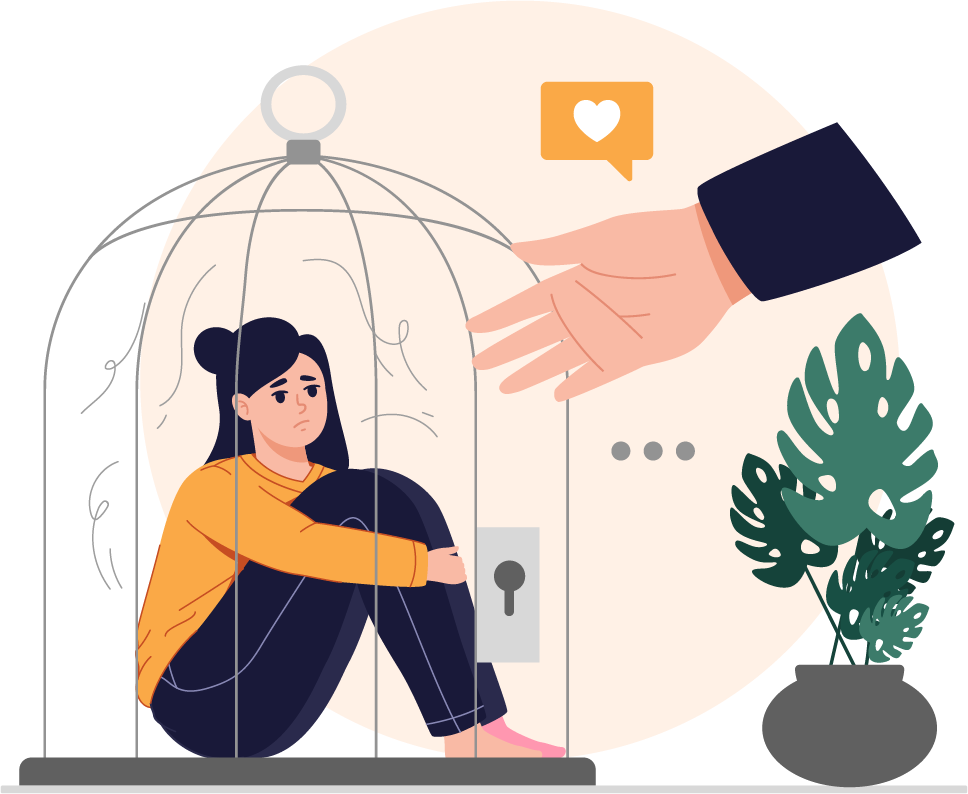
Break The Stigma Of Suffering Alone, Start Healing With CPG

Sometimes, life becomes too heavy, and even the simplest task feels like a burden. Thoughts run faster than reason, and you don’t know how to control them. Emotional dysregulation and unwanted behaviors deeply affect normal functioning.
The licensed therapists/psychologists at Capital Psychiatry Group understand how mental health challenges can affect productivity, relationships, and routine. Our treatment plans help strengthen interpersonal skills, emotional regulation, and self-awareness. The hardest part is rarely the therapy itself. It is the belief that your difficulties are not serious enough to take up a clinician’s time, which keeps people struggling for years longer than they need to.

Psychological Services We Provide in New Jersey

Capital Psychiatry Group offers a wide range of services: therapy, counseling, and emotional support for seniors, adults, teens, and adolescents. Our certified psychologists help you manage and treat ADHD, stress, anxiety, depression, and life transitions (divorce, postpartum grief, loss) and more. Sessions usually run weekly at the start of treatment, then space out as progress holds. If you are unsure which service fits your situation, our team will help you decide before you book anything.

Individual Therapy

Our professionals help patients develop self-awareness and resilience to cope and manage everyday challenges with confidence.

Couples Therapy

CPG brings together couples to rebuild trust, manage emotions, control anger issues, and have better communication.

Child and Family Therapy

Help children, parents, and families resolve behavioral or emotional issues like conflicts, anxiety, grief, school stress, and more.

Therapy for Military Members

Military life often leaves personnel with PTSD, grief, and anger issues. CPG helps adults & seniors manage stress and PTSD symptoms with therapies and counseling such as CBT, MBCT, DBT, and more

Therapy for Veterans

Transition to civilian life can cause stress, anxiety, and prolonged grief. With therapies and counseling, CPG makes it easy to cope with major life changes

Therapy for Seniors

The expert psychologists at CPG provide geriatric therapy and counseling to help seniors navigate through life transitions (e.g., retirements) and find emotional peace from loneliness.

Therapies and Counseling We Offer

The licensed psychologists and therapists at CPG offer a wide range of evidence-based therapies and counseling services, and we’re not limited to the ones listed below. No single approach works for every person or every condition, which is why our clinicians train across several. The method is matched to your situation, not to a house preference.

Why People Trust Us in New Jersey

Capital Psychiatry Group’s mental health professionals don’t rush and take time to listen and understand your experiences & curate a treatment plan accordingly. Progress is tracked with validated measures rather than impressions, so you can both see whether the approach is working. If the fit is not right, say so, and we will arrange a change without any awkwardness.

Appendix: Common Psychological Therapy Terms

IPT

Interpersonal Psychotherapy

CBT-I

Cognitive Behavioral Therapy for Insomnia

PE

Prolonged Exposure Therapy

ERP

Exposure and Response Prevention

You've Been Carrying Storms Alone; Let's Find Clarity With CPG

Psychological issues can make you feel like you are living in a continuous state of sadness. Tiredness, low mood, anxiety, and unending worry can impact your daily functioning, relationships, and work. At Capital Psychiatry Group, our licensed psychologists and therapists/counselors help you understand what’s beneath those feelings and guide you toward genuine emotional balance. Most people who finally book tell us afterward that they wish they had done it sooner. You do not need to arrive with your thoughts organized or your problem neatly defined.

Accessible Psychological Care Near You

Every community deserves access to experts and trusted psychological care. Capital Psychiatry Group proudly serves individuals and families via both HIPAA-compliant telehealth and onsite clinics. You can also book same-day, weekend, and even walk-in appointments with CPG mental health professionals. Telehealth covers the gaps between our offices, including areas where no clinic sits nearby, and your records stay connected wherever you are seen

Therapy isn’t only for crises or diagnosed conditions. Many people who come to Capital Psychiatry Group arrive because something keeps repeating. It might be the same argument with a partner, reactions they regret afterward, situations they now avoid, or a flatness that settled in after a loss and never quite lifted.

None of that requires a diagnosis to be worth addressing. Others come with clearer symptoms, including persistent worry, low mood, panic, intrusive thoughts, or difficulty functioning at work or school. Both are legitimate reasons to book.

The question worth asking yourself isn’t whether things are bad enough. It’s whether you’ve been managing the same difficulty alone for longer than you’d advise a friend to. Still unsure? Call 609-323-5252, and our team will help you decide whether an assessment is the right first step.

You don’t need to choose before anyone has assessed you. Be cautious of any practice that asks you to pick a therapy type from a menu at the start.

Your first appointment is an assessment for exactly this reason. Your clinician looks at what you’re experiencing, how long it has been present, what you’ve already tried, and what you want to change. Then they recommend the approach with the strongest evidence for that specific picture.

Different conditions genuinely respond to different methods. A well-matched approach often means steady progress, while a poor match can mean months of frustration.

Approaches can also shift mid-treatment when the clinical picture changes. That’s normal, not a sign something went wrong. You’re always entitled to ask why a particular method was chosen, and a good clinician will have a clear answer.

Structured psychological therapy has a substantial evidence base built over decades. For many mild to moderate cases of anxiety and depression, research shows it performs comparably to medication, and its benefits often last longer after treatment ends.

That said, honesty matters more than marketing here. Therapy doesn’t work for everyone, and outcomes depend heavily on three things:

  • An accurate assessment
  • A genuine working relationship with your clinician
  • What you do between sessions

The people who improve most usually practice what they discuss, instead of treating the appointment itself as the whole intervention.

Some conditions respond best to therapy combined with medication. When that applies, CPG psychologists will tell you directly and coordinate with our psychiatric team, even if it means recommending more than therapy alone.

Your first appointment is an assessment, not treatment, so expect more questions than answers. Your clinician will ask about your current difficulties, when they started, your history, relationships, sleep, work or school, and what you want to be different.

It often feels closer to a structured conversation than the therapy people picture from television. You won’t be asked to relive anything you’re not ready to discuss. Where trauma is part of the picture, clinicians build stability first and approach difficult material at a pace you set.

By the end, you and your clinician agree on what you’re working toward and how often to meet. Many people leave feeling lighter, some feel tired, and both reactions are completely normal. Bring a photo ID, your insurance card, and any previous mental health records you have.

Sessions typically run 45 to 60 minutes. They’re usually weekly at the start of treatment, then spaced out as your gains hold.

Total duration depends on what you’re working on. Structured treatment for a defined problem, such as panic, insomnia, or a specific phobia, often runs a set course over several months. Long-standing patterns, complex trauma, and relationship difficulties generally take longer, and open-ended work suits some people.

What you shouldn’t accept is vagueness. After your assessment, your Capital Psychiatry Group clinician gives you a realistic estimate and a point at which progress is formally reviewed. You’re never committing to something indefinite without checkpoints.

If you need to pause treatment for practical reasons, say so. Planned breaks work far better than simply disappearing.

With insurance, most patients pay their plan’s behavioral health copay per session. Because therapy is usually weekly at first, ask our team to calculate the monthly cost, not just a single visit. Also confirm whether your deductible applies and whether your plan limits annual sessions.

These details differ significantly between New Jersey plans and employers. That’s why CPG verifies your specific benefits before your first appointment, not after it.

If you’re uninsured or prefer to keep insurance out of it, self-pay rates are quoted upfront. It’s also worth checking whether your employer offers an Employee Assistance Program (EAP). Many include several fully covered counseling sessions that people never use because they forgot the benefit existed. Call 609-323-5252 for a cost estimate before you book.

For most talk-based therapy, research shows video sessions produce outcomes comparable to in-person care. The practical advantages are real: no commute, easier consistency, and far less disruption to your workweek. Consistency matters more to outcomes than location does, and weekly attendance is exactly what telehealth protects.

New Jersey law requires most health plans to cover telehealth on the same terms as office visits, so choosing video rarely costs more.

Being in the room is better in some situations. These include significant safety concerns, some intensive trauma work, and cases where symptoms need closer observation. The other common obstacle is practical: many people have nowhere private to talk at home. If that’s your situation, tell us, and an in-clinic appointment at one of our New Jersey locations may be the better choice.

Psychological testing uses standardized assessments to answer questions an interview alone can’t. At Capital Psychiatry Group, licensed psychologists use testing to clarify diagnoses such as ADHD in children and adults, learning disorders, autism spectrum concerns, and complex presentations where mood and anxiety symptoms overlap.

Testing usually includes three parts:

  • A clinical interview
  • Questionnaires completed by you, and sometimes by parents or teachers
  • Structured tasks measuring attention, memory, and reasoning

It may take one longer appointment or several shorter ones, followed by a feedback session that explains results in plain language.

The written report can guide treatment and support school or workplace accommodations. Insurance coverage for testing varies more than coverage for therapy, and some plans require prior authorization. Call 609-323-5252 so our team can check before scheduling.

The working relationship between you and your clinician is one of the strongest predictors of whether therapy helps. That makes fit a clinical issue, not a matter of politeness.

Give it two or three sessions before deciding, since early appointments involve assessment and can feel more formal than the work that follows. If it still doesn’t feel right, you have two good options. You can raise it directly with your therapist, which often changes the dynamic productively, or you can contact our office and ask to be rematched.

Nobody will take offense, and you won’t need to explain yourself in detail. What matters is telling someone instead of quietly stopping, which is how therapy most often ends too early. Preferences about approach, communication style, gender, or cultural background are all legitimate to state.

Progress should show up in your life, not only in the room. Alongside validated questionnaires given at intervals, the practical markers are usually clearer:

  • Sleeping better
  • Arguing less, or recovering faster afterward
  • Doing something you’d been avoiding
  • Noticing a spiral earlier than you used to
  • Needing less recovery time after a hard day

Improvement is rarely linear, and two patterns are worth knowing in advance. Early progress often plateaus before deepening, and trauma-focused work can feel harder for a period before it eases. Both are expected, not signs of failure.

Your CPG clinician should review progress with you at set points so you’re never left guessing. If nothing has shifted after a reasonable stretch, that’s a signal to change the approach, not to persist with more of the same.

This is worth examining instead of accepting as settled, because unsuccessful therapy usually has an identifiable cause.

Common causes include:

  • The approach may have been poorly matched to the actual problem.
  • The relationship with that clinician may never have worked.
  • Treatment may have ended before it had time to take effect, which is extremely common.
  • Life circumstances at the time, such as an unsafe living situation or untreated sleep problems, may have made progress nearly impossible.
  • An underlying condition may have gone unrecognized, with therapy aimed at the symptom instead of the driver.

Bringing what you already know makes the next attempt more productive. Share what type of therapy you had, roughly how many sessions, what helped even slightly, and where it fell apart. That history is useful clinical information, not evidence against you.

Yes to the first, and not necessarily to the second. Couples therapy works best with both partners present, but you can begin alone if your partner is hesitant. Individual work on a relationship difficulty is valuable in its own right.

Sessions at Capital Psychiatry Group are structured so both people are heard without one being positioned as the problem, which is the most common fear people bring to a first appointment.

Family therapy may involve parents and children together, some sessions separately, or a mix, depending on what the difficulty requires. Families commonly come to us for recurring conflict, a child’s behavioral changes, adjusting after a separation, or grief affecting everyone differently.

Confidentiality works differently in relational therapy than in individual work, and your clinician will explain exactly how private disclosures are handled before you begin.

Your sessions are protected under HIPAA and New Jersey privacy law. Your records aren’t released to employers, family members, or anyone else without your written authorization.

There are narrow legal exceptions that every licensed clinician in New Jersey must follow, and you deserve to know them upfront:

  • An imminent risk of serious harm to you or another person
  • Suspected abuse or neglect of a child or vulnerable adult
  • A valid court order

These exceptions are limited and specific, not open-ended.

If you use insurance, claims contain limited clinical information, such as dates of service and a diagnosis code. That’s one reason some patients choose self-pay. In couples and family work, your clinician will explain at the outset how private disclosures are handled, so nothing is left ambiguous.

Therapy isn’t an emergency service, so it’s important to know where to turn when things escalate between appointments.

If you’re having thoughts of harming yourself or someone else, or you’re in immediate danger, call or text 988 to reach the Suicide & Crisis Lifeline, available at any hour. You can also call 911 or go to your nearest emergency department. Getting emergency help never jeopardizes your place in therapy.

For urgent but non-emergency situations, call Capital Psychiatry Group at 609-323-5252. Examples include a sharp worsening of symptoms or a difficult week before your next session. We’ll look at bringing your appointment forward.

When risk is part of your clinical picture, your therapist will build a written safety plan with you early in treatment. That way you’ll know your warning signs, coping steps, and who to contact before a crisis ever happens.

Your mental health matters at Capital Psychiatry Group. We offer evaluations, BHI, and precision medication management to fully optimize your mental health.

Leaving so soon? Fill out the form and stay in touch!

Let's have a chat

Book Your Appointment Now