
Accessible Bipolar Disorder Treatment in New Jersey
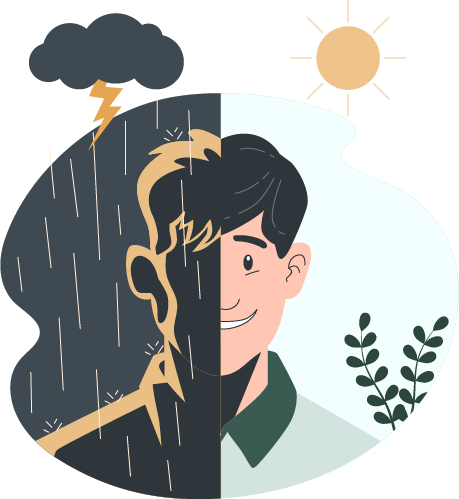
Control Highs and Lows With CPG’s Bipolar Care
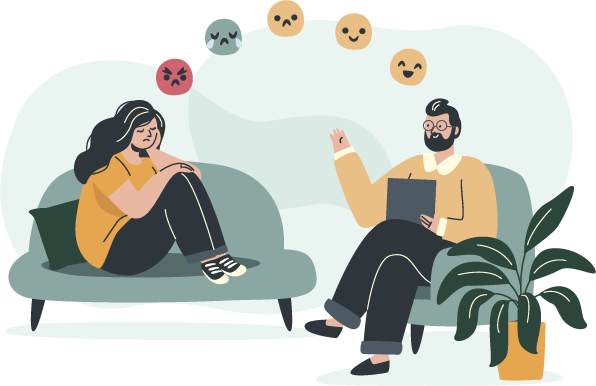
Types of Bipolar Disorder
Bipolar I
is defined by at least one episode of mania, an intense state of elevated mood, energy, or irritability that lasts more than a week. These episodes can disrupt sleep, behavior, and daily life. Most people with bipolar I also go through depressive episodes, though not always.
Bipolar II
involves patterns of depression and hypomania. It is a less severe form of mania. Unlike bipolar I, full manic episodes don’t occur, and people often seek help during the depressive phases, unaware of the hypomanic ones.
Cyclothymia
is a rarer, milder version of bipolar disorder. In this type of bipolar disorder, you may experience frequent mood swings between low-grade depression and hypomania. Its symptoms are less intense but are still disruptive over time.
Symptoms of Bipolar Disorder
It’s normal to have emotional ups and downs occasionally; brief mood changes lasting hours are typical and do not imply bipolar disorder. Understanding the nature, duration, and intensity is the key to identifying bipolar disorder. The symptoms of bipolar disorder may include symptoms of mania, depression, and hypomania.
Manic in Bipolar Disorder
Common symptoms include:
- An unusually elevated mood or intense irritability
- Getting significantly less sleep than usual
- Feeling overconfident or euphoric, with a sense of invincibility
- Speaking rapidly or more often
- Uncontrollable irrational thoughts
- Trouble concentrating or staying on task
- Impulsive or risky behaviors, excessive spending
Hypomania in Bipolar Disorder
Common symptoms of hypomania include:
- Elevated or unusually cheerful mood
- Increased energy or physical activity
- Needing less sleep without feeling tired
- Heightened self-confidence or an inflated sense
- Talking more than usual or feeling pressure to talk
- Racing thoughts or easily jumping between ideas
- Increased goal-directed activity
- Engaging in impulsive behaviors
Depression in Bipolar Disorder
Common symptoms include:
- Persistent sadness, hopelessness, or anxiety
- Loss of interest or pleasure in activities
- Fatigue or low energy
- Difficulty concentrating, slowed thoughts or movements
- Changes in appetite, eating significantly more or less
- Disrupted sleep, either too much or too little
- Intense feelings of guilt or worthlessness
- Thoughts of death or suicide
Therapies and Counseling We Offer for Bipolar
Family Therapy / Marriage Therapy
Motivational Interviewing
Cognitive Therapy
Relationship Counseling
Relapse Prevention Therapy
Stress Management
Group Therapy
How We Diagnose Bipolar Disorder
- Our providers will discuss how bipolar affects your sleep, focus, energy, and relationships.
- We will review your family and personal mental health history.
- CPG professionals will rule out co-occurring conditions like trauma, depression, or substance use.
- We use DSM-5 criteria to identify your exact bipolar type.
- If diagnosed, we provide a treatment plan with safe medication.
- CPG delivers therapy, counseling, and medication when needed.
Why Choose CPG for Bipolar Treatment in NJ
Capital Psychiatry Group is a trusted bipolar therapy and medication provider in New Jersey. Our certified psychiatrists and psychologists always prioritize the individual patients and create a customized treatment plan:
- All insurances accepted
- Board-certified psychiatrists & psychologists
- 7+ clinics in NJ & increasing
- Walk-in appointments
- Weekend appointments
- Same-day virtual/clinical appointments
- Extensive therapies & counseling
- Trusted medication management
- Personalized treatment plan

High, Low, Numb, Loud, We Help You Change Cycle
Locations We Serve in New Jersey
Capital Psychiatry Group makes it easy to get expert bipolar disorder care in-clinic and online. Our online/onsite treatment is available across New Jersey. Our clinics are serving patients across Hamilton Township, Newark, Ewing Township, Bayonne, South Plainfield, Cinnaminson, and Basking Ridge. With secure telehealth & accessible clinic visits, you can connect with a licensed provider who understands your needs.

The two are often confused because both involve intense emotions, but they work very differently.
Bipolar disorder involves distinct mood episodes lasting days to weeks: mania or hypomania, and depression. Between episodes, many people return to their usual baseline.
Borderline personality disorder (BPD) involves emotional shifts that can change within hours. These are usually triggered by relationship stress, fear of abandonment, or feeling rejected. There’s also an ongoing pattern of unstable relationships and self-image, rather than separate episodes.
Other clues help clinicians tell them apart. Decreased need for sleep with high energy points toward bipolar disorder. Chronic emptiness and intense reactions to interpersonal conflict point toward BPD.
The distinction matters because treatment differs. Bipolar disorder usually requires mood-stabilizing medication. BPD responds best to specialized therapy such as Dialectical Behavior Therapy (DBT). Some people have both, so a careful evaluation is essential.
It’s possible. Many people with bipolar disorder seek help during a depressive episode and don’t recognize, or remember, earlier periods of hypomania. As a result, bipolar disorder is often first misdiagnosed as major depression.
Clues that depression may be part of bipolar disorder include:
- Past periods of unusually high energy, reduced sleep, or racing thoughts
- Depression that began in the teens or early twenties
- A family history of bipolar disorder
- Episodes that start and stop abruptly
- Feeling agitated, or “wired but tired,” during depression
Clinicians may use screening tools like the Mood Disorder Questionnaire (MDQ). They may also ask family members what they’ve observed.
Getting this right matters. Antidepressants taken without a mood stabilizer can trigger mania or rapid mood shifts in people with bipolar disorder. If you’ve had depression that hasn’t responded to treatment, call 609-323-5252 to request a thorough evaluation.
Bipolar disorder is among the most strongly inherited psychiatric conditions. Having a parent or sibling with it raises your risk significantly. Still, genetics don’t guarantee it will develop. Differences in brain circuits that regulate mood, energy, and sleep also play a role.
In people who are vulnerable, certain factors can set off an episode:
- Sleep disruption: Lost sleep from travel, shift work, or a newborn is one of the most common triggers of mania.
- Major stress: Loss, conflict, or big life changes
- Alcohol and drugs: Especially stimulants and cannabis
- Antidepressants used alone, without a mood stabilizer
- Childbirth: The weeks after delivery carry a particularly high risk.
- Seasonal changes: Some people notice mania in spring or summer and depression in fall or winter.
Learning your personal triggers is a key part of long-term stability.
Bipolar disorder most often begins in the late teens or early twenties, though it can start in childhood or later in adulthood. First episodes after age 50 are less common and should prompt a medical workup for neurological or other physical causes.
In teens, early signs can be easy to mistake for typical adolescent behavior. Warning signs include:
- Stretches of very little sleep without seeming tired
- Sudden grandiose plans or unusual risk-taking
- Rapid speech and racing thoughts
- Periods of deep withdrawal or hopelessness
- A noticeable drop in school performance
Diagnosing bipolar disorder in children is complex. Persistent irritability and temper outbursts often have other explanations. Clinicians look for clear, distinct episodes that differ from a child’s usual behavior.
Early diagnosis matters, because effective treatment can reduce future episodes and protect school, relationships, and development during formative years.
Medication is the foundation of bipolar treatment. Most people need ongoing medication to prevent episodes, not just to treat them.
Mood stabilizers
- Lithium: One of the most effective long-term treatments, especially for preventing mania
- Divalproex (Depakote): Often used for acute mania and mixed episodes
- Lamotrigine (Lamictal): Particularly helpful for preventing bipolar depression
Atypical antipsychotics
- Several are FDA-approved for mania, including aripiprazole, olanzapine, and quetiapine.
- Some are specifically approved for bipolar depression, including quetiapine (Seroquel), lurasidone (Latuda), cariprazine (Vraylar), and lumateperone (Caplyta).
Antidepressants are used cautiously, if at all, and typically only alongside a mood stabilizer.
Finding the right combination can take time. Your psychiatrist will consider your bipolar type, past response, other health conditions, and side effect concerns.
Lithium has been used for decades and remains a first-line treatment in major guidelines, including those from CANMAT and the International Society for Bipolar Disorders. It is highly effective at preventing manic episodes and is uniquely associated with a reduced risk of suicide.
Lithium has a narrow range between an effective level and a harmful one. That’s why regular monitoring is essential:
- Blood levels are checked when starting or adjusting the dose, then periodically.
- Kidney and thyroid function are tested regularly, since lithium can affect both over time.
Certain situations can raise lithium levels: dehydration, heavy sweating, illness with vomiting or diarrhea, and some medications like ibuprofen or certain blood pressure drugs. Seek medical care right away for signs of toxicity, such as worsening tremor, confusion, unsteadiness, vomiting, or diarrhea.
Some can, and it’s a common reason people stop treatment. Knowing the options helps you and your psychiatrist find a balance.
Higher risk: Olanzapine, quetiapine, and divalproex are more often linked to weight gain and changes in blood sugar and cholesterol.
Lower risk: Lamotrigine, lurasidone, lumateperone, and aripiprazole tend to have smaller effects on weight and metabolism, though individual responses vary.
Because some medications increase the risk of metabolic syndrome, psychiatrists recommend regular monitoring of:
- Weight and waist size
- Blood pressure
- Fasting blood sugar or A1C
- Cholesterol and triglycerides
If weight gain becomes a concern, don’t stop your medication on your own. Your psychiatrist can adjust doses, switch medications, or add strategies to protect your physical health while keeping your mood stable.
Feeling well is usually a sign that medication is working, not that you no longer need it. Bipolar disorder is a long-term condition, and stopping treatment significantly raises the risk of relapse.
Several factors make stopping especially risky:
- Abrupt discontinuation, particularly of lithium, is linked to rapid return of mania.
- Mania can feel appealing, so the urge to stop sometimes appears just as an episode begins.
- Each new episode can make future episodes harder to treat.
Many people stay on maintenance medication for years, sometimes for life, much like people managing diabetes or high blood pressure.
If side effects, cost, or life changes like pregnancy make you want to stop, talk with your psychiatrist first. Together, you can explore alternatives, adjust doses, or plan a gradual, closely monitored change. Call 609-323-5252 to discuss your options.
Most episodes don’t arrive without warning. Early signs, sometimes called a relapse signature, often appear days or weeks before a full episode.
Common early signs of mania or hypomania:
- Needing less sleep but feeling energized
- Starting many new projects at once
- Talking faster or feeling unusually confident
- Increased spending or risk-taking
Common early signs of depression:
- Sleeping much more, or struggling to get out of bed
- Pulling away from friends
- Losing interest in usual routines
Changes in sleep are often the very first signal. Tracking mood, sleep, and energy daily, with a journal or a mood-charting app, makes patterns easier to spot.
Many patients create a written action plan with their psychiatrist. It lists personal warning signs, steps to take, and trusted people to contact when early symptoms appear.
People with bipolar disorder are especially sensitive to disruptions in their body clock. Irregular sleep and daily schedules can destabilize mood, and even one night of lost sleep can trigger mania in some people.
Interpersonal and Social Rhythm Therapy (IPSRT) was developed specifically for bipolar disorder. It helps you keep consistent times for waking, eating, working, socializing, and sleeping, while addressing relationship stress that disrupts those routines.
Practical habits that protect stability include:
- Going to bed and waking up at the same time daily, including weekends
- Limiting late-night screens and caffeine
- Getting morning daylight
- Planning ahead for time-zone travel or overnight events
- Discussing shift work with your psychiatrist, since rotating schedules can be destabilizing
Routine may feel restrictive at first, but many patients find it’s one of the most powerful tools for preventing episodes.
These are patterns that change how bipolar disorder is treated.
Rapid cycling means having four or more mood episodes, including mania, hypomania, or depression, within 12 months. It’s more common in women and in bipolar II. Doctors often check for thyroid problems, substance use, and antidepressant use, since all three can drive frequent cycling.
Mixed features means experiencing symptoms of mania and depression at the same time. For example, you might feel hopeless while also feeling restless, sleepless, and full of racing thoughts. This combination can be especially distressing and is linked with a higher risk of suicidal thoughts.
Both patterns often respond poorly to antidepressants, which can make symptoms worse. Treatment usually focuses on mood stabilizers and certain antipsychotics. If your moods shift frequently or feel tangled together, tell your psychiatrist, since it can change your treatment plan significantly.
Pregnancy requires careful planning for people with bipolar disorder, ideally before conception.
Medication decisions are individualized. Some bipolar medications carry risks during pregnancy. Divalproex, for example, has an FDA boxed warning because of a significant risk of birth defects. Others, including lithium and certain antipsychotics, may be continued with closer monitoring. The goal is balancing the risks of medication against the very real risks of untreated mood episodes.
The postpartum period is a high-risk time. Sleep loss and hormonal shifts after delivery make relapse more likely. Bipolar disorder is also the strongest risk factor for postpartum psychosis, a rare but serious emergency. It involves confusion, hallucinations, or severe agitation, usually within the first few weeks after birth.
Coordination between your psychiatrist and OB-GYN, a sleep protection plan, and close follow-up after delivery all help keep parent and baby safe.
Some episodes can be managed with prompt medication changes, but certain warning signs need immediate help.
Seek emergency care if someone:
- Hasn’t slept for several days and is becoming more agitated
- Hears voices, sees things others don’t, or holds beliefs that are clearly out of touch with reality
- Is acting in ways that put themselves or others in danger, such as reckless driving
- Talks about suicide or self-harm
- Is unable to care for basic needs like eating or hydration
What to do:
- Call 911 if anyone is in immediate danger.
- Call or text 988 for suicidal thoughts or a mental health crisis.
- In New Jersey, each county has a designated psychiatric emergency screening center that can evaluate someone in crisis.
After any emergency, follow up with your psychiatrist quickly to adjust treatment and prevent future crises.
Support from loved ones makes a real difference in long-term stability.
During mania or hypomania:
- Stay calm and avoid arguing about grand plans or beliefs.
- Help protect finances, for example by temporarily holding credit cards with their agreement.
- Encourage rest and contact with their psychiatrist.
During depression:
- Offer company and practical help with daily tasks.
- Avoid saying “just snap out of it.”
- Watch for any talk of suicide.
When they’re stable, plan together. Agree on warning signs, who to call, and what support they want if an episode begins. Some families put this in writing.
Look after yourself too. The Depression and Bipolar Support Alliance (DBSA) offers peer support groups for people living with bipolar disorder and for their families. Family-focused therapy can also reduce conflict and relapse risk.
Yes. With consistent treatment, many people with bipolar disorder build fulfilling careers, relationships, and families. Bipolar disorder is a chronic condition, but it’s highly manageable.
Long-term stability usually rests on a few key habits:
- Taking medication consistently, even when feeling well
- Staying connected with your psychiatrist and therapist
- Protecting sleep and daily routines
- Limiting alcohol and avoiding recreational drugs
- Knowing your early warning signs
- Building a strong support network
Some people notice that untreated hypomania once felt productive or creative, and they worry treatment will dull them. In reality, preventing severe episodes usually protects the energy and focus people care about most.
Setbacks may happen, but they don’t erase progress. With the right plan, the time between episodes can grow longer and life can feel steadier. Capital Psychiatry Group supports patients across New Jersey through every stage. Call 609-323-5252 to start.