

When people think about ADHD, they imagine a restless child. In contrast, this is not the only face of ADHD. There are three types of Attention Deficit Hyperactivity Disorder: Inattentive, Hyperactive/Impulsive, and Combined.
In this guide, we examine the most visually recognizable type, the Hyperactive/Impulsive presentation, which is often reduced to the stereotype of someone “in constant motion.” Understanding the full picture, including its neurobiological causes, diagnostic criteria, and evidence-based treatment options, is what actually leads to better outcomes. We cover symptoms, causes, how it is properly diagnosed, how it is managed and treated, and practical strategies that support daily life for children and adults across New Jersey.
Did you know
- 11.3% of U.S. children ages 5 to 17 had ever been diagnosed with ADHD
- Kids with ADHD show brain development delays of approximately 3 years in regions governing attention and self-regulation
- 20 to 60% of children with ADHD have co-occurring learning disabilities
- ADHD increases the risk of substance use disorders by 2 to 3 times, underscoring the importance of early, consistent treatment
What Is Hyperactive/Impulsive ADHD?
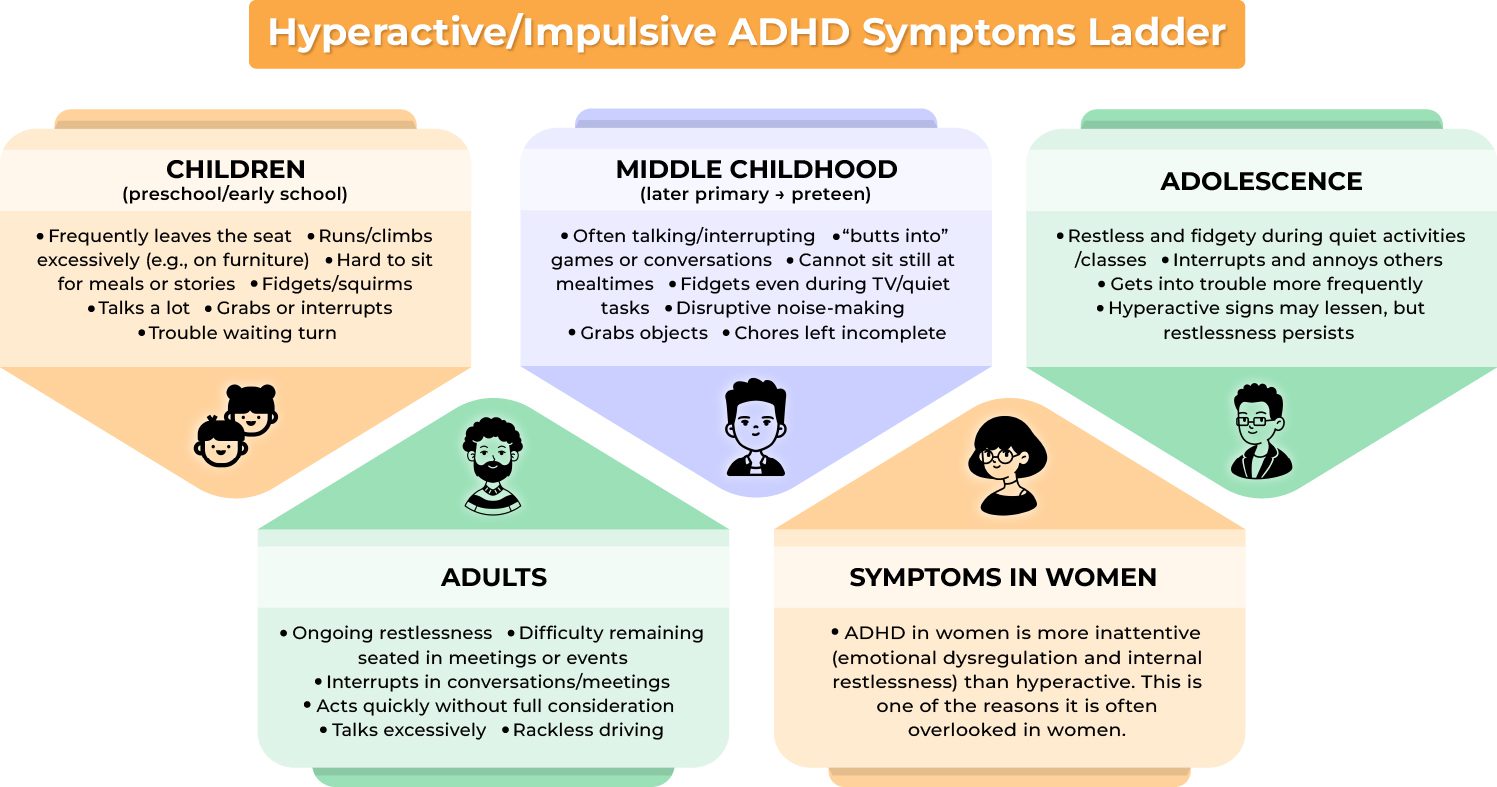
The Hyperactive/Impulsive type of ADHD is characterized by persistent patterns of excessive motor activity, excessive talking, and acting before thinking, behaviors that cause clinically significant impairment across multiple settings. It is more commonly identified in childhood because the external behaviors are visible and disruptive, but many adults carry these patterns forward.
With age, the outward hyperactivity often diminishes and may become internalized restlessness, but the underlying difficulties with self-regulation, impulse control, and executive function frequently persist. The neurobiological foundation involves differences in prefrontal cortex circuits, particularly in regions governing attention, impulse inhibition, and behavioral flexibility. Understanding that this is a brain-based condition rather than a behavioral choice is foundational to appropriate treatment.
Key Symptoms of Hyperactive/Impulsive ADHD
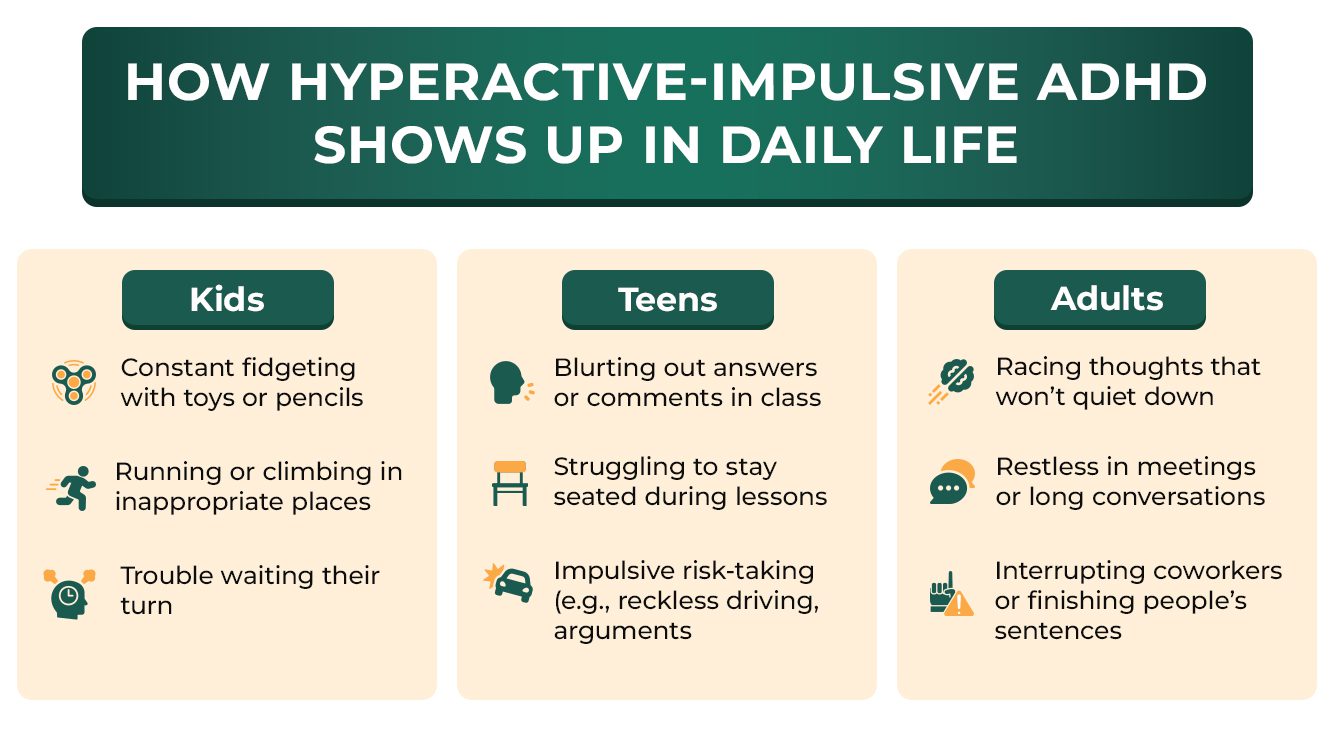
People experience Hyperactive/Impulsive ADHD differently across ages and settings. No single test or screening tool produces a diagnosis. Accurate evaluation by a qualified healthcare professional using DSM-5 criteria, a clinical interview, and age-appropriate rating scales when appropriate is essential for a reliable diagnosis.
Here are the core symptoms people with the Hyperactive/Impulsive subtype often experience.
Physical / Overt Symptoms These are symptoms you can often observe directly:
- Fidgeting, tapping hands or feet, squirming, and difficulty remaining seated
- Trouble staying engaged in quiet, low-stimulation activities
- Appearing to be “on the go” or driven by a motor even in settings where stillness is expected
- Talking excessively in ways that disrupt social and academic situations
Impulsivity Symptoms These reflect the pattern of acting before thinking:
- Blurting out answers before a question is finished
- Difficulty waiting for their turn in conversation, games, or structured activities
- They often interrupt or intrude on others’ conversations and activities, not from rudeness but from an impaired capacity to inhibit the response
Causes and Risk Factors
The exact cause of ADHD is not fully established, and it is understood to arise from a combination of genetic, neurobiological, and environmental factors rather than a single cause. ADHD affects an estimated 6.0% of adults in the United States, and the Hyperactive/Impulsive subtype has specific associated risk patterns worth understanding.
Research has identified structural and functional differences in prefrontal cortex circuits, particularly in the right hemisphere, which governs attention regulation, behavioral inhibition, and emotional control. These differences affect dopamine and norepinephrine signaling, the same neurotransmitter systems that ADHD medications target.
Genetics represents a substantial contributor: if a parent has ADHD, the risk to offspring is significantly elevated, with heritability estimates ranging from 70 to 80% in twin studies. A 2016 study found that children exposed to elevated levels of lead had a greater risk of ADHD, adding environmental neurotoxin exposure to the list of contributing factors. Other documented associations include prenatal alcohol or tobacco exposure, low birth weight, and early brain injuries, though none of these are deterministic causes on their own.
Expert Insights
Hyperactive-Impulsive ADHD is noticed first because its symptoms are visible. In contrast, inattentive symptoms can be quietly overlooked for years.
How Do You Know If It's Hyperactive/Impulsive ADHD?
Being hyperactive or impulsive occasionally is developmentally normal, particularly in younger children. The clinical distinction is whether these behaviors are persistent, pervasive across multiple settings, inconsistent with developmental level, and causing meaningful functional impairment in social, academic, or occupational life.
The board-certified providers at Capital Psychiatry Group use DSM-5 criteria to evaluate and diagnose ADHD through both in-clinic and telehealth appointments. Diagnosis is not based on a single observation or questionnaire result but on a structured clinical interview, validated rating scales, developmental history, and ruling out conditions that can mimic ADHD.
DSM-5 Diagnostic Criteria
The following points differentiate the Hyperactive/Impulsive ADHD subtype from ordinary hyperactivity or impulsivity:
- Several symptoms were present before age 12
- Symptoms have been present for at least 6 months.
- Symptoms are present in two or more settings, not only at home
- They cause a clinically significant impact on social, academic, or occupational functioning
- For children under 17, six or more hyperactive/impulsive symptoms must be present
- For individuals aged 17 and older, five or more symptoms must be present
Don’t Mistake It, Get Clarity with CPG
Treatment Options for Impulsive/Hyperactive ADHD
The evidence-based treatment plan for Hyperactive/Impulsive ADHD combines medication and therapy, and research consistently shows that combined treatment produces better outcomes than either approach used alone. The licensed psychiatrists and psychologists at CPG recommend individualized combinations based on age, symptom severity, co-occurring conditions, and patient preference
Medication
Stimulants are the most studied and most commonly prescribed medications for ADHD. They work by increasing dopamine and norepinephrine availability in the prefrontal cortex, improving attention, impulse control, and behavioral regulation. This class includes:
- Methylphenidate formulations (brand names: Ritalin, Concerta)
- Amphetamine-based medications include mixed amphetamine salts (Adderall) and lisdexamfetamine (Vyvanse).
Long-acting formulations are generally preferred for school-age children and working adults because they provide consistent coverage throughout the day and reduce the rebound effects associated with short-acting versions.
Non-stimulants are appropriate alternatives for patients who do not respond well to stimulants, cannot take them due to cardiovascular history or other contraindications, or need a medication that also addresses co-occurring anxiety or sleep difficulties:
- Atomoxetine (Strattera): a selective norepinephrine reuptake inhibitor with particular utility when anxiety co-occurs with ADHD
- Guanfacine (Intuniv): an alpha-2 agonist that supports impulse control and emotional regulation, often used as an adjunct
- Clonidine (Kapvay): similar mechanism to guanfacine, also used for hyperactivity and sleep disturbance in children
Non-stimulants do not work as quickly as stimulants but can be effective, especially for managing impulsivity when stimulants are not a suitable fit.
Important: The medication information above is educational and does not replace a clinical evaluation. All medication decisions are made by a licensed provider based on individual health history and presentation.
Therapies and Counseling Services We Offer
CBT is one of the most well-researched talk therapies for ADHD and is considered the current gold standard of psychotherapy for this population. In the context of Hyperactive/Impulsive ADHD, it helps patients recognize impulsive thought patterns and replace them with workable strategies that support impulse control, frustration tolerance, and sustained attention. Therapy is available through HIPAA-compliant video sessions and in-clinic appointments at our New Jersey locations.
- Behavior Modification
- Behavioral Therapy
- Cognitive Behavioral Therapy (CBT)
- Cognitive-Behavioral Family Therapy
- Person-Centered Therapy
- Mindfulness-Based Cognitive Therapy (MBCT)
- Motivational Interviewing
- Group Therapy
- Supportive Psychotherapy
- Therapy for Communication Issues
Behavioral Therapy for Children
Behavioral therapy is especially well-supported for children with ADHD and is recommended as the first-line intervention for children under six before medication is considered. It teaches children positive behavioral habits through structured reinforcement and works most effectively when parents and teachers apply consistent systems in both home and school settings. Parents and teachers set clear, predictable rules and use reward systems, such as point charts or immediate positive feedback, to build and maintain healthy routines.
Over time, these structured small changes help children develop working self-control. Research consistently shows that combined treatment using both medication and behavioral therapy produces better outcomes than either approach used alone, particularly for managing impulsivity and improving social functioning.
Lifestyle & Coping Strategies
- Consistent sleep and sufficient rest improve prefrontal cortex function and reduce impulsivity the following day
- Swimming, walking, and aerobic physical activity improve mood, reduce restlessness, and support dopamine regulation
- A balanced nutritional diet positively influences cognition, emotional regulation, and behavioral control
- Visual timers and planner apps help externalize time awareness, which is frequently impaired in ADHD
- Visual reminders such as sticky notes keep easy-to-forget tasks present and reduce working memory demands
- Diaphragmatic breathing and brief mindfulness exercises calm physiological arousal and reduce reactive impulsivity
- Structured short breaks during longer tasks prevent the cognitive fatigue that worsens impulsive responses
Why Choose Capital Psychiatry Group?
The board-certified psychiatrists and psychologists at Capital Psychiatry Group understand how the Hyperactive/Impulsive subtype affects daily life across school, work, relationships, and home. Our treatment plans are built around each patient’s specific symptom profile, severity, co-occurring conditions, and life circumstances, rather than a one-size approach. Clinical recommendations follow current evidence-based guidelines, and every medication or therapy decision is explained in plain language before it is implemented.
Here is why people across New Jersey choose CPG for Hyperactive/Impulsive ADHD treatment:
- All insurance accepted
- Board-certified psychiatrists and psychologists
- Same-day appointments
- Weekend and walk-in appointments
- HIPAA-compliant telepsychiatry
- Behavioral therapy for children and adults
- Cognitive Behavioral Therapy (CBT)
- Evidence-based clinical evaluation using DSM-5 criteria
- Personalized treatment plans
Capital Psychiatry Group’s mission is to provide consistent, evidence-based treatment for Hyperactive/Impulsive ADHD across our New Jersey clinics and through statewide telehealth.
Takeaways
Hyperactive/Impulsive ADHD has its own distinct challenges, separate from other ADHD presentations, and it is manageable with the right clinical support. Early, accurate diagnosis is the most important step, because it opens the door to effective treatment rather than years of misattribution and self-blame.
Capital Psychiatry Group makes evidence-based ADHD care accessible for New Jersey residents through in-clinic appointments and HIPAA-compliant telehealth. Our licensed psychiatrists, psychologists, and therapists identify which ADHD presentation applies, evaluate for co-occurring conditions, and build a personalized treatment plan that fits your schedule and goals. If symptoms have been disrupting daily life, work, relationships, or academic performance, call 609-323-5252 to schedule an evaluation, with same-day appointments often available.
If you are in crisis or having thoughts of harming yourself, call or text 988 for the Suicide and Crisis Lifeline at any hour, or call 911.
Frequently Asked Questions
What is the difference between hyperactive/impulsive ADHD and combined ADHD?
Hyperactive/Impulsive ADHD involves six or more hyperactive/impulsive symptoms with fewer than six inattentive symptoms meeting clinical threshold. Combined ADHD meets the full criteria for both the inattentive and hyperactive/impulsive presentations at the same time. In practice, many children diagnosed with the Hyperactive/Impulsive subtype are later reclassified as Combined as the inattentive features become more apparent with age and academic demand. An accurate evaluation by a licensed clinician distinguishes between them rather than relying on observation or self-report alone.
At what age can hyperactive/impulsive ADHD be diagnosed?
ADHD can be diagnosed from age four, though most evaluations happen between ages six and twelve when school-based demands make symptoms more visible. DSM-5 requires that symptoms were present before age twelve, even if the formal evaluation happens later. In adults, a clinician reconstructs the childhood history through patient and collateral report, school records, and developmental history. There is no upper age limit for diagnosis, and many adults are first evaluated in their thirties, forties, or beyond.
Can hyperactive/impulsive ADHD look different in girls than in boys?
Yes. Boys with Hyperactive/Impulsive ADHD are more often identified early because their behavior is disruptive in classroom settings. Girls tend to show the same underlying impulse control difficulties in subtler ways, including emotional outbursts, social impulsivity, and risk-taking behavior, rather than physical restlessness. Socially expected masking in girls also delays recognition. This discrepancy in identification rates does not reflect a true difference in prevalence; it reflects a diagnostic system historically calibrated to the male presentation.
Is hyperactive/impulsive ADHD a childhood condition that goes away?
Not reliably. While visible hyperactivity often becomes less prominent in adulthood, the underlying executive function and impulse control differences persist for the majority of people. In adults, hyperactivity frequently becomes internal restlessness, difficulty sitting through meetings, or chronic low-level irritability rather than physical movement. Impulsivity continues in the form of interrupting, financial decisions made without deliberation, career instability, and relationship friction. Treating it in childhood reduces but does not eliminate adult impact.
Do stimulant medications worsen anxiety in patients who have both ADHD and anxiety?
They can in some cases, which is why the evaluation at CPG reviews co-occurring anxiety before any prescription is made. For patients where anxiety is significant, non-stimulant options such as atomoxetine are often tried first because they address both conditions rather than potentially exacerbating one. In other cases, treating the ADHD effectively reduces the anxiety that was driven by chronic underperformance, missed deadlines, and interpersonal stress. The decision depends on the clinical picture and is reviewed at follow-up rather than made once and left unchanged.
Can a child be too young for medication, and is behavioral therapy alone enough?
For children under six, clinical guidelines recommend behavioral therapy as the first-line treatment before medication is introduced. For children six and older, the research supports combined treatment, medication plus behavioral therapy, as producing better outcomes than either approach alone, particularly for impulse control and social functioning. Whether medication is appropriate depends on symptom severity, functional impairment, parental preference, and the child’s medical history. CPG providers discuss this openly rather than defaulting to medication.
What is behavioral therapy for children with ADHD and how does it work in practice?
Behavioral therapy for children focuses on training parents and teachers to apply consistent systems that reduce impulsive behavior and build self-control over time. Parents learn to give clear, brief instructions, set up structured reward systems using immediate positive feedback, and respond to behavior in ways that reinforce desired patterns rather than escalating conflict. Schools implement parallel strategies through 504 Plans or IEPs. The approach is skills-based and practical rather than insight-based, which suits the developmental stage and the way ADHD actually affects behavior.
How does ADHD increase the risk of substance use, and what does treatment do about it?
Research puts the increased substance use risk at two to three times that of the general population, driven by impulsivity, sensation-seeking, poor frustration tolerance, and the self-medication of uncomfortable symptoms. Stimulant medication, when appropriately prescribed and monitored, actually reduces rather than increases substance use risk in people with ADHD, contrary to a common concern. Behavioral therapy that builds self-regulation and distress tolerance also directly addresses the mechanisms behind the risk. At CPG, co-occurring substance use is assessed and treated alongside ADHD rather than in sequence.
Is telehealth effective for evaluating and treating hyperactive/impulsive ADHD?
Yes. Diagnostic evaluation via HIPAA-compliant video uses the same DSM-5 criteria, structured clinical interviews, and validated rating scales as in-person care. Medication management, dose titration, follow-up monitoring of sleep, appetite, heart rate, and blood pressure, and CBT sessions are all conducted effectively through telehealth. New Jersey law requires most health plans to reimburse telehealth at the same rate as in-person visits. For patients with busy schedules, school-age children, or those in parts of New Jersey without nearby psychiatric providers, telehealth removes a meaningful access barrier.
What does an ADHD follow-up appointment at CPG involve?
Follow-up appointments are structured and time-efficient rather than open-ended. Your provider reviews how the current medication is performing, including focus, task completion, sleep quality, appetite, mood, and blood pressure where applicable. You discuss any changes in circumstances, school or work demands, or side effects. Dose timing or formulation may be adjusted. For patients in therapy alongside medication, behavioral strategies and progress are reviewed. Most medication follow-ups are conducted by HIPAA-compliant telehealth for New Jersey residents, with in-person visits scheduled when a full reassessment or physical check is needed.
How do I get started with ADHD evaluation at Capital Psychiatry Group in New Jersey?
Call 609-323-5252 or book online. Our team confirms your insurance coverage and copay before the appointment, and same-day evaluations are often available for patients who need a quick start. You can be seen in person at one of our New Jersey clinic locations or by secure telehealth from anywhere in the state. Bring a list of current medications, any previous evaluations or school records you have access to, and a note of the symptoms or situations that prompted you to seek care. Nothing needs to be in order before you call.
- https://www.cdc.gov/nchs/products/databriefs/db499.htm
- https://www.nimh.nih.gov/news/science-updates/2007/brain-matures-a-few-years-late-in-adhd-but-follows-normal-pattern
- https://pubmed.ncbi.nlm.nih.gov/23724008/
- https://pmc.ncbi.nlm.nih.gov/articles/PMC4414493/
- https://www.aafp.org/dam/AAFP/documents/patient_care/adhd_toolkit/adhd19-assessment-table1.pdf?ref=clarityxdna.com
- https://www.cdc.gov/mmwr/volumes/73/wr/mm7340a1.htm
- https://pmc.ncbi.nlm.nih.gov/articles/PMC2894421/
- https://pmc.ncbi.nlm.nih.gov/articles/PMC4888135/
- https://www.cdc.gov/adhd/treatment/index.html
- https://pmc.ncbi.nlm.nih.gov/articles/PMC5797481/
- https://www.buffalo.edu/ubreporter/archive/vol36/vol36n37/articles/ADHD.html
- https://www.additudemag.com/nutrition-harmonizes-adhd-brain/
- https://www.nimh.nih.gov/health/publications/adhd-what-you-need-to-know
Clinical Adviser:
Author: