

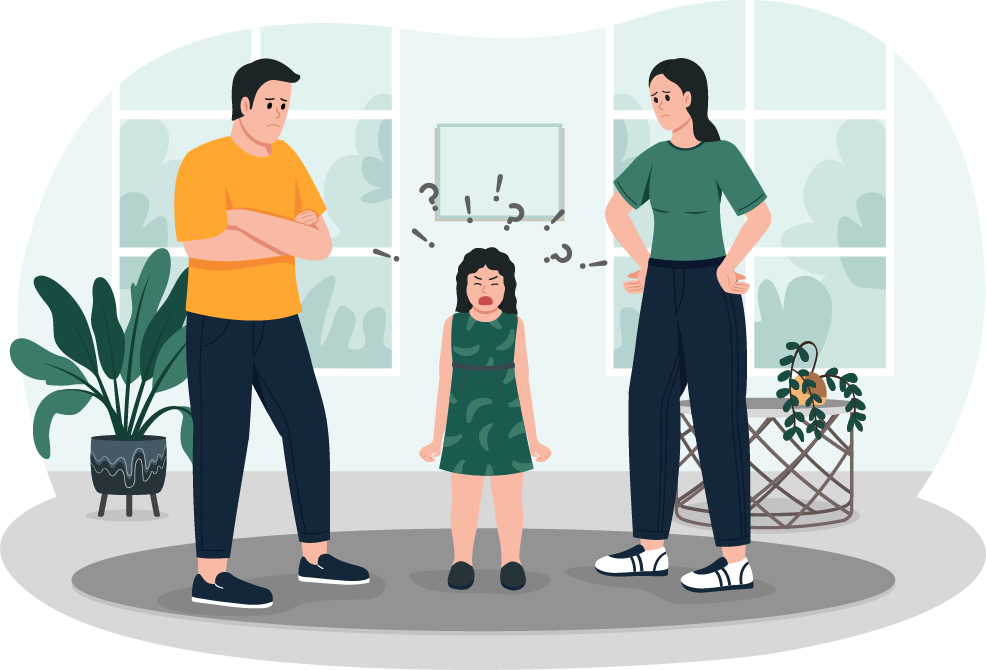




Every child pushes back sometimes. Toddlers test limits, school-age kids argue about bedtime, and teens fight for independence. These are healthy parts of development. ODD is different in three key ways.
Frequency. For children under 5, oppositional behavior appears on most days. For children 5 and older, it shows up at least once a week, week after week. Occasional bad days don’t count.
Intensity. The anger, arguing, or spitefulness is far stronger than what you’d expect for your child’s age and the situation. A small request can trigger a major blowup.
Impact. The behavior damages family life, school, or friendships. Parents often describe “walking on eggshells” to avoid setting their child off.
Another clue is the pattern of who receives the behavior. Defiance in ODD is usually aimed at adults in authority, such as parents and teachers. It may also come with persistent irritability, not just occasional frustration.
If you’re unsure whether your child’s behavior crosses the line, a professional evaluation can give you a clear answer. Call Capital Psychiatry Group at 609-323-5252 to talk through your concerns.