


Postpartum anxiety is anxiety that becomes intense, persistent, and hard to control after childbirth (or adoption), often centering on your baby’s safety, your adequacy as a parent, or “what if” scenarios that won’t shut off. It can show up immediately after delivery or months later. For many people, it’s loudest when the house is quiet, especially at night.
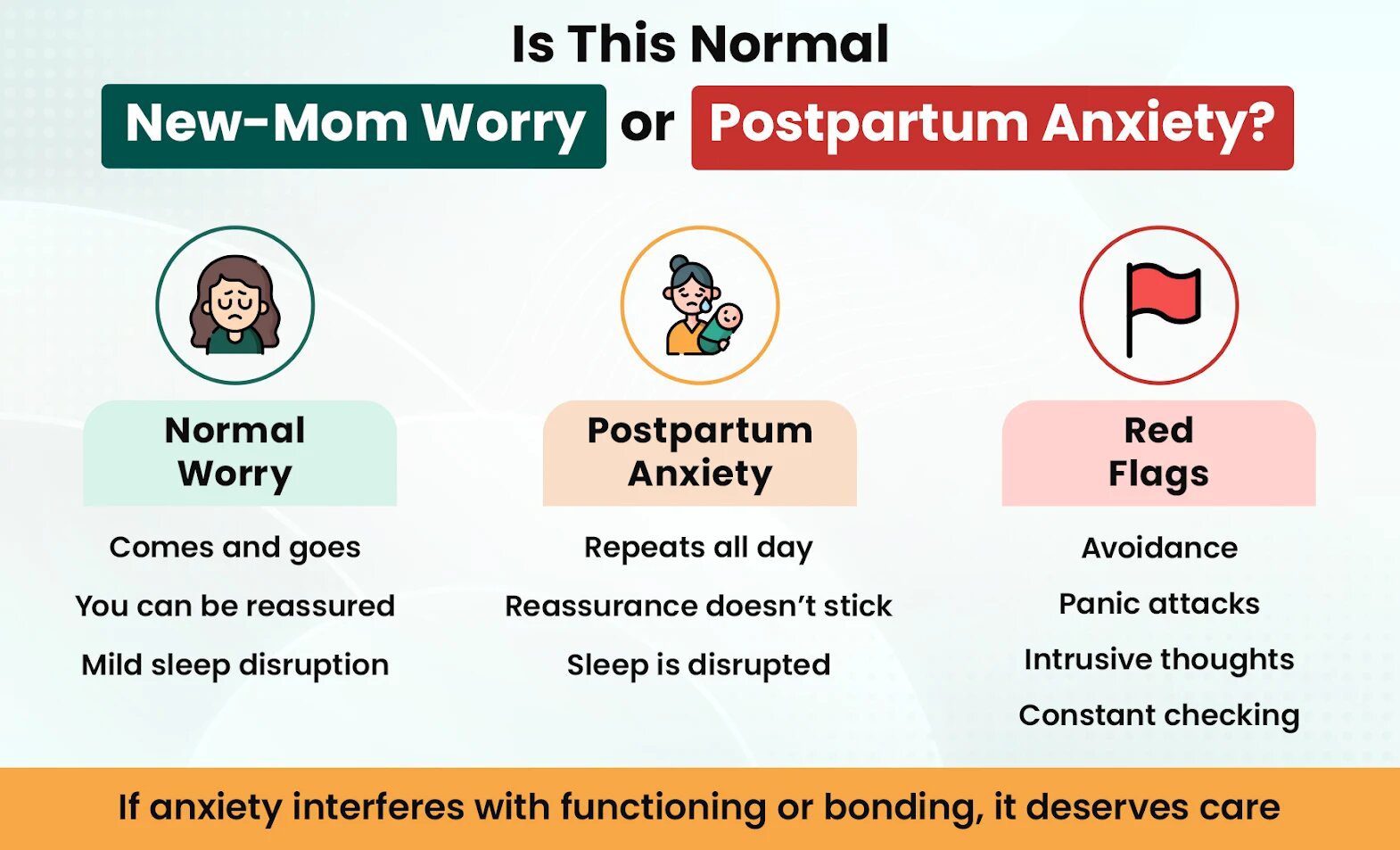
Normal new-parent worry comes and goes, yet it still allows you to sleep, eat, and function. Postpartum anxiety doesn’t. It keeps you scanning for danger, replaying worst-case outcomes, and double-checking everything until you’re exhausted. If the fear feels bigger than the happiness, and it keeps repeating, your nervous system may be stuck in threat mode.
Postpartum Anxiety Symptoms
Postpartum anxiety symptoms often fall into three buckets: body, mind, and behavior, usually in a mix that disrupts daily life.
Physical Symptoms of Postpartum Anxiety
- Shortness of breath, chest tightness, “can’t get a full breath.”
- Heart palpitations or a racing heart
- Nausea, stomach aches, appetite changes
- Muscle tension, headaches, restlessness
- Sleep disruption (even when the baby sleeps)
Emotional and Cognitive Symptoms
- Racing thoughts, difficulty focusing, forgetfulness
- Feeling on edge, irritable, easily startled
- Inability to relax even in “safe” moments
- Intrusive thoughts (unwanted images or ideas that scare you)
- Panic attacks or sudden surges of fear
Behavioral Symptoms
- Avoiding outings, visitors, driving, or being alone with the baby
- Repeated checking (breathing, feeding timing, temperature, locks, monitors)
- Controlling routines rigidly because uncertainty feels unbearable
- Reassurance-seeking (Googling symptoms, asking others repeatedly)
Signs of postpartum anxiety often sound like:
- “I know it’s unlikely… but I can’t stop thinking it will happen.”
- “I’m tired, but I can’t sleep, my brain won’t power down.”
- “I don’t trust anyone else to do it right.”
Same-Day Postpartum Anxiety Visit
On-site/Online appointments in New Jersey, New York, & Pennsylvania are fast, private, and designed for new parents who can’t “wait it out.”
We’ll review symptoms, triggers, and the right next steps.
What Causes Postpartum Anxiety
There isn’t one single trigger; postpartum anxiety usually builds from a few pressures hitting at the same time. The most common drivers:
- Hormone shifts after delivery can increase stress sensitivity
- Sleep deprivation (broken sleep changes how the brain processes threat)
- New responsibility + high vigilance around an infant’s safety
- Stressful birth or postpartum events (pain, recovery, breastfeeding challenges, NICU, feeding/weight concerns)
- Prior anxiety history (even if it was “manageable” before pregnancy)
- Prior pregnancy loss (miscarriage/stillbirth can amplify fear after a new birth.
- Weaning transitions (some people notice anxiety spikes with hormonal change)
One important point: postpartum anxiety is common and treatable. It’s not a character flaw. It’s a stress-response system that’s turned up too high for too long.
Risk Factors that Raise the Odds
Research and clinical patterns repeatedly point to a few redictors that matter:
- Personal or family history of anxiety or depression
- High baseline “trait anxiety” (you’ve always been a worrier)
- High anxiety in the early postpartum days (a strong signal for later postpartum anxiety)
- Low partner support or a weak support network
- High stress load (financial stress, relationship strain, multiple children)
- Difficult delivery experience or preterm birth
- Baby health concerns
- Eating disorder history
Medication Questions, Answered Clearly
If you’re considering medicine for postpartum anxiety, we’ll walk through options, side effects, and breastfeeding concerns.
No pressure, just a plan that fits your life.
Postpartum Anxiety Vs Depression Vs Baby Blues
The fastest way to separate these is the “core feeling.”
Quick comparison table
| Condition | Core pattern | Typical timing | Key signs |
|---|---|---|---|
| Baby blues | Mood swings + tearfulness + overwhelm | First 1–2 weeks | Improves on its own, not disabling |
| Postpartum anxiety | Fear + hyper-alertness + “what if” loops | Anytime postpartum (often early, can be later) | Insomnia, checking, intrusive fears, panic |
| Postpartum depression and anxiety | Low mood + anxiety together | Often within first months | Hopelessness, loss of interest, guilt + worry |
| Postpartum OCD (a form of postpartum anxiety disorders) | Intrusions + compulsions to reduce fear | Postpartum | Disturbing thoughts + rituals/checking/cleaning |
| Postpartum psychosis | Break from reality (emergency) | Usually early postpartum | Hallucinations/delusions, severe confusion, high risk |
Panic Disorder Vs Anxiety Attacks (postpartum version)
Some people experience postpartum anxiety & panic disorder patterns, episodes of intense fear with physical symptoms (racing heart, dizziness, doom, shaking). Others have “anxiety attacks” that build more gradually. Either way, the body experience is real and can be treated.
If you want internal reading later, these related topics often overlap: Generalized Anxiety Disorder, Panic Disorder vs. Anxiety Attacks, Social Anxiety Disorder, Specific Phobias, and Separation Anxiety.
Postpartum Anxiety vs Depression Screening
If you’re unsure whether this is postpartum depression vs postpartum anxiety, we’ll clarify what’s driving your symptoms.
Accurate diagnosis improves treatment results.
Postpartum Anxiety at Night (why it spikes)
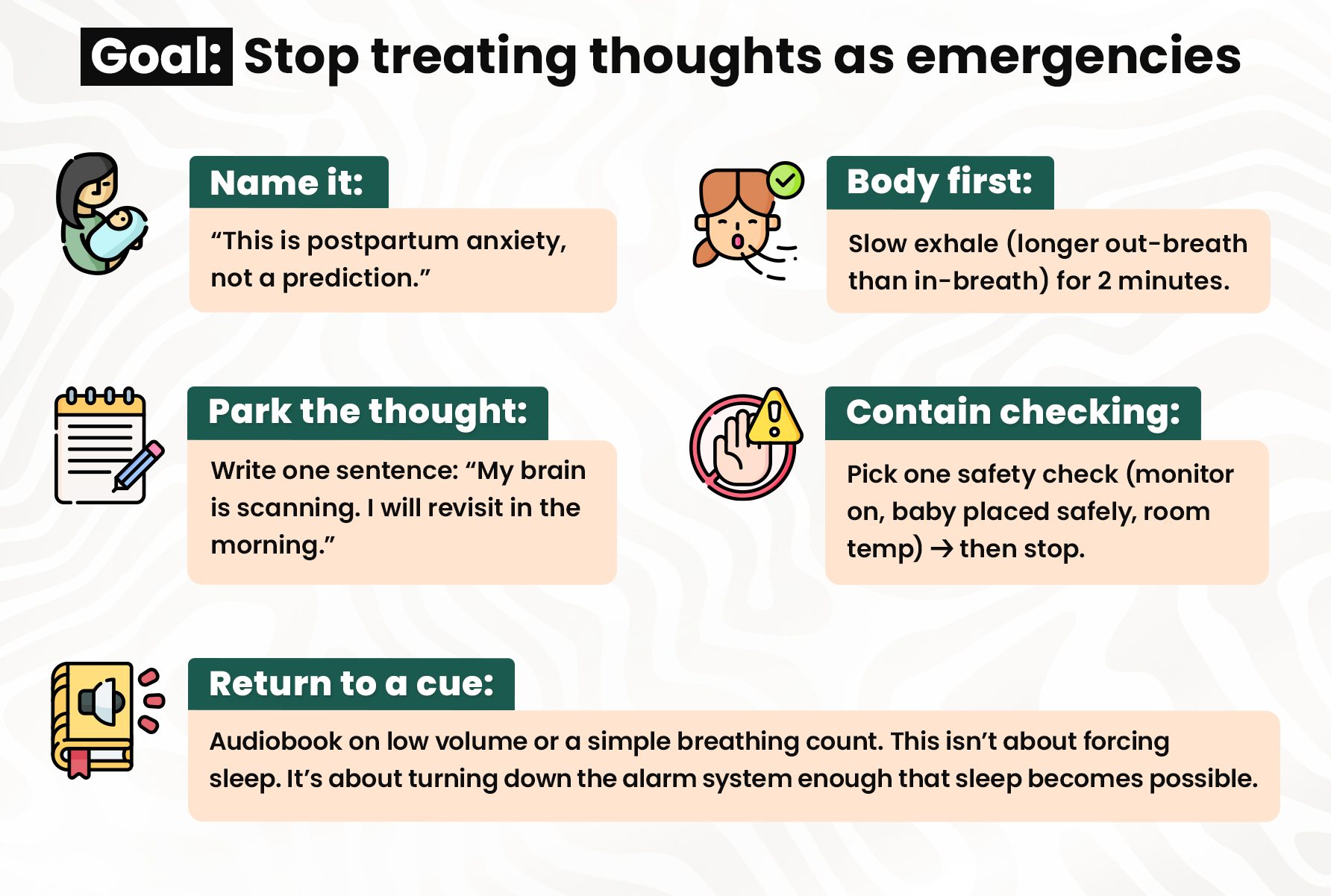
Postpartum anxiety at night often worsens because darkness + silence removes distractions, and a tired brain reads uncertainty as danger. Add a sleeping infant, and the mind starts scanning: breathing, temperature, choking, fire, SIDS fears, “what if I miss something.”
Postpartum Anxiety Quiz
People often search for “postpartum anxiety quiz” because they want clarity. This is not a diagnosis, just a practical screen. Over the past 2 weeks, how often have you had:
- Worry that feels nonstop or hard to control?
- Trouble sleeping even when the baby sleeps?
- Physical anxiety symptoms (racing heart, shortness of breath, nausea)?
- Intrusive thoughts you find disturbing or scary?
- Repeated checking/reassurance-seeking that doesn’t calm you for long?
- Avoiding normal activities because “something could happen”?
If you answered “often” to 3+ items, it’s a strong sign to talk with a provider about postpartum anxiety treatment.
Postpartum Anxiety Disorder Treatment
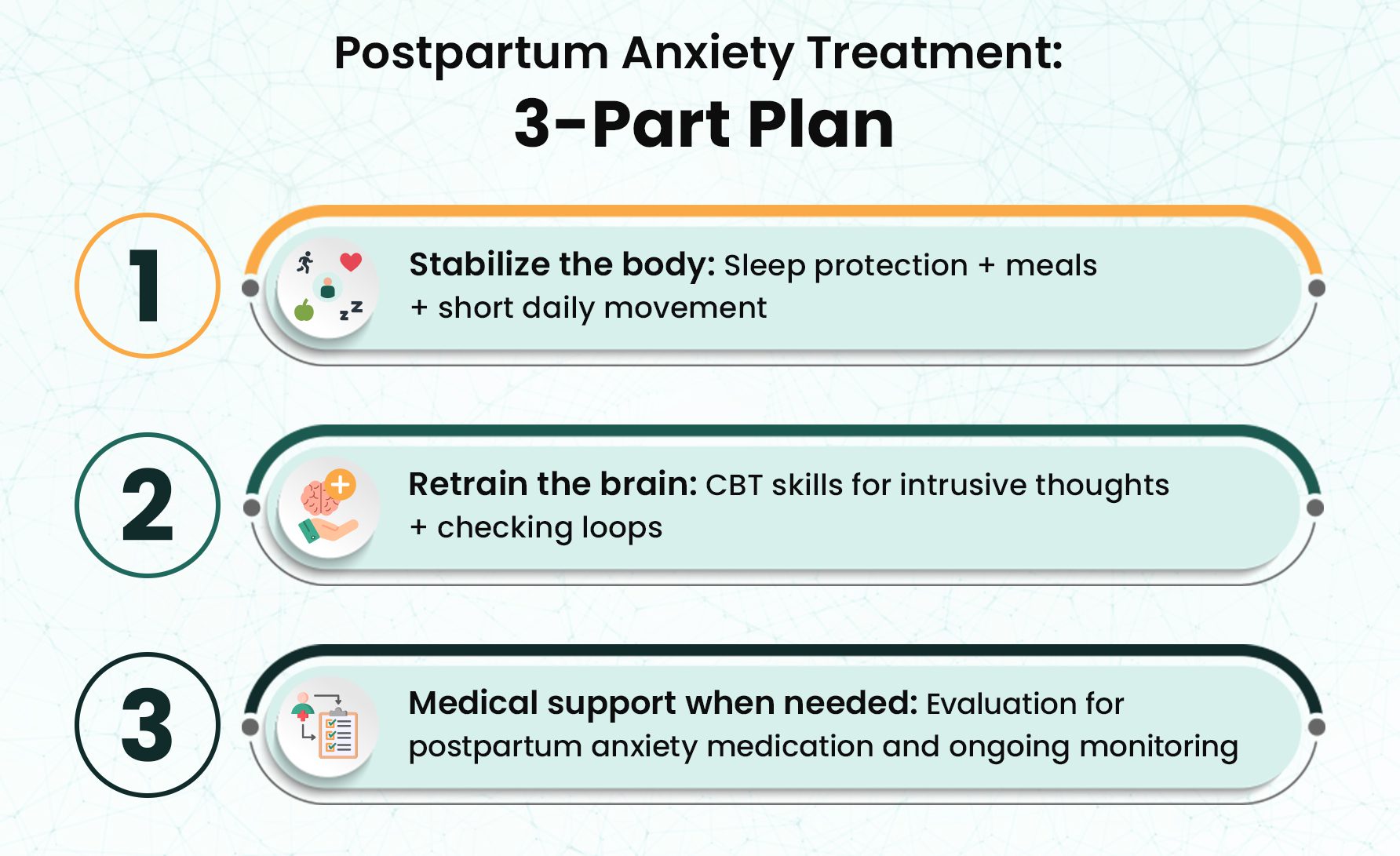
Best outcomes usually come from matching the plan to severity: therapy skills + targeted support, and medication when anxiety is impairing.
Therapy (first-line for many)
- Cognitive Behavioral Therapy (CBT): helps you challenge catastrophic predictions, reduce reassurance loops, and respond differently to uncertainty.
- For OCD patterns, exposure-based approaches are often used alongside CBT techniques.
- If you’re searching for “therapist postpartum anxiety” or “postpartum anxiety therapist near me,” telehealth can remove the biggest barrier: leaving the house when you’re already overwhelmed.
Therapy That Targets The Worry Loop
Work with a clinician who understands postpartum anxiety disorders, checking, intrusive thoughts, panic, and insomnia.
CBT strategies you can use immediately between sessions.
Medication (when symptoms are persistent or severe)
Postpartum anxiety medication is commonly an SSRI or SNRI, chosen based on symptoms, history, and breastfeeding considerations. Some people also need short-term support for sleep or acute panic while a longer-term medication starts working.
A few high-clarity truths (because people search “best”):
- There isn’t one best medication for postpartum anxiety. The “best medication for postpartum anxiety” is the one that fits your symptoms, medical history, breastfeeding status, and past response.
- If you’re dealing with postpartum depression and anxiety treatment needs together, medication choice may target both mood and anxiety.
- Your prescriber should talk through benefits/side effects and breastfeeding plans before starting anything.
You may also see newer options discussed for postpartum mood symptoms that can include anxiety and insomnia in some cases; those decisions are always individualized.
Lifestyle Supports that Matter More Than People Expect
- Sleep protection: a planned 4-hour uninterrupted block when possible (shift coverage)
- Support groups: online groups can reduce isolation fast
- Movement: short daily walks reduce physiological arousal
- Nutrition: steady intake prevents “anxiety spikes” from low blood sugar
- Limit spiraling searches: Googling symptoms at 2 a.m. often fuels health anxiety postpartum
Why Choose Us For Postpartum Anxiety Treatment
Postpartum separation anxiety can show up as intense distress when someone else holds the baby or watches the baby. It’s often tied to fear of harm, fear of being replaced, or fear that you’ll miss something critical.
Treatment focuses on small, planned exposures (short separations that build confidence), plus cognitive work around control, uncertainty, and trust. Here is why people trust us:
- All insurance accepted
- Multi-state clinical presence
- No wait time in appointments
- Appointment within 24 hours
- Walk-in appointments
- Weekend appointments
- HIPAA-compliant telepsychiatry
- Therapy & counseling services
- Safe medication management
- Certified psychiatrists & psychologists
- Personalized treatment plans
- Patient-first approach to care
A “30-minute handoff” plan that actually works
If letting others help makes you anxious, don’t aim for a full night off first. Start here:
- Choose one predictable time daily (same time helps).
- Hand off baby care for 30 minutes with a clear, simple plan (feed window, soothing steps).
- During the handoff, do only one recovery task: nap, shower, or eat, nothing else.
- Afterward, notice what happened (facts), not what you feared (predictions).
- This builds evidence in your brain that support is safe, and your body can downshift.
A Note on “Postpartum Anxiety ICD 10” Searches
People often look up postpartum anxiety ICD 10 or postpartum anxiety ICD 10 code when dealing with insurance or paperwork. In practice, coding usually reflects the specific anxiety presentation (for example, generalized anxiety, panic, OCD features) and clinical context. If you need an exact billing code, your diagnosing clinician is the right source; they’ll match documentation, symptoms, and payer requirements.
When to Get Help Urgently
Get immediate help if you have:
- Thoughts of harming yourself or your baby
- Hallucinations, paranoia, or feeling disconnected from reality
- Inability to sleep for long periods with escalating agitation
- In the U.S., you can call or text 988 for urgent mental health support.
Partner Support, Structured
We can help you build a home plan: sleep shifts, handoffs, and boundaries that reduce anxiety instead of feeding it wherever you are in New Jersey, New York, or Pennsylvania. CPG is here for you.
Support works best when it’s specific.
FAQs
What causes postpartum anxiety?
Postpartum anxiety is usually triggered by hormone shifts, sleep deprivation, stress, and a heightened sense of responsibility, often amplified by prior anxiety, traumatic birth experiences, or limited support.
What are the most common postpartum anxiety symptoms?
Racing thoughts, insomnia, constant worry, intrusive fears, irritability, physical anxiety symptoms (palpitations, nausea), and repeated checking are among the most common postpartum anxiety symptoms.
Can you have postpartum depression and anxiety together?
Yes. Postpartum depression and anxiety often overlap. Many parents experience low mood plus intense worry, and treatment may address both together.
Postpartum anxiety vs depression, what’s the difference?
Postpartum anxiety centers on fear and threat-scanning; postpartum depression centers on persistent low mood, hopelessness, and loss of interest. Sleep issues can happen in both, so the “core feeling” matters.
What is postpartum anxiety disorder treatment?
Most treatment plans include CBT-based therapy, practical support (sleep, routines, help at home), and medication when symptoms are severe or persistent. Combined therapy + medication can be more effective for some people.
What medication helps postpartum anxiety?
SSRIs are commonly used, and SNRIs are also options. There isn’t a single best medicine for postpartum depression and anxiety or postpartum anxiety; the choice depends on symptoms, history, and breastfeeding plans.
How we reviewed this article:
CPG experts follow strict sourcing standards, using peer-reviewed research, academic institutions, and trusted medical journals. Only reliable, evidence-based sources are cited to maintain accuracy and integrity.
- https://pmc.ncbi.nlm.nih.gov/articles/PMC4363269/
- https://www.marchofdimes.org/find-support/topics/postpartum/baby-blues-after-pregnancy
- https://ppdil.org/2025/02/postpartum-anxiety-vs-new-parent-fears/
- https://pmc.ncbi.nlm.nih.gov/articles/PMC5797481/
- https://pmc.ncbi.nlm.nih.gov/articles/PMC4842365/
- https://pubmed.ncbi.nlm.nih.gov/23834364/
Our Review Standards
Our team regularly reviews health and wellness writings. Updates are made on the availability of new & authentic information.
Our Editorial Team
Clinical Adviser:
Author: